If you've started a Shorts channel, someone has probably told you to "post 3–10 a day". It's repeated so often that it sounds like a rule. It isn't. YouTube doesn't publish a recommended number, and the real risk at high volume is sameness, not the count.
This guide covers what YouTube's help pages say about cadence, upload limits, spam and monetisation as of October 2026, plus a frequency plan you can adapt. It is about how often to post, not the clock — that is covered in best time to upload YouTube Shorts. Blipix is our product — a tool that makes faceless Shorts and can post them on a schedule — and we say where it is the wrong pick.
In short
- There is no official number. YouTube says: "There is no minimum posting cadence required for your videos to perform well."
- A daily upload limit exists, but it isn't published. It depends on feature access, country or region, channel history and strikes.
- Volume becomes a problem when it becomes repetition. The Spam policy targets "high volumes of similar content with minimal changes".
- There are two rulebooks. Community Guidelines spam can mean removed videos and strikes. YouTube Partner Program (YPP) inauthentic and reused content policies affect whether a channel can earn. Neither is a copyright strike.
- A sensible default: a cadence you can review properly, held for a few weeks, and raised only while each Short stays distinct. No cadence guarantees growth.
What YouTube actually says about posting cadence
YouTube's Shorts search and discovery tips are the closest thing to an official answer: "There is no minimum posting cadence required for your videos to perform well."
The same page says its systems look at whether viewers choose to watch a Short, average view duration, average percentage viewed, likes and post-watch surveys. Shorts are ranked on performance and viewer personalisation, so posting more gives you more Shorts to be judged, not better ones.
Where "3–10 a day" comes from
More uploads mean more chances to find a format that lands. The data only helps if the Shorts genuinely differ. Ten near-identical Shorts teach you about as much as one, and they edge toward the pattern YouTube's Spam policy describes.
The one published count is a floor, not a target: from February 1, 2027, one way a channel stays active in YPP is "2 long-form videos or 5 Shorts uploaded every 90 days".
Is there a daily Shorts upload limit?
Yes, but YouTube doesn't publish the number.
Its page on common uploading errors explains that YouTube limits how many videos a channel can upload in a 24-hour period, across desktop, mobile and the YouTube API. Limits can vary by country or region and by channel history, and copyright or Community Guidelines strikes can affect how much you can upload.
The feature access page lists uploading videos and Shorts as a standard feature with a "Limited daily limit" without verification, and a "Higher daily limit" with advanced feature access, which is based on channel history or identity. If you hit the limit with advanced access, you wait 24 hours.
Specific numbers quoted in creator forums are community reports, not YouTube policy.
The 15-video batch is not a cap
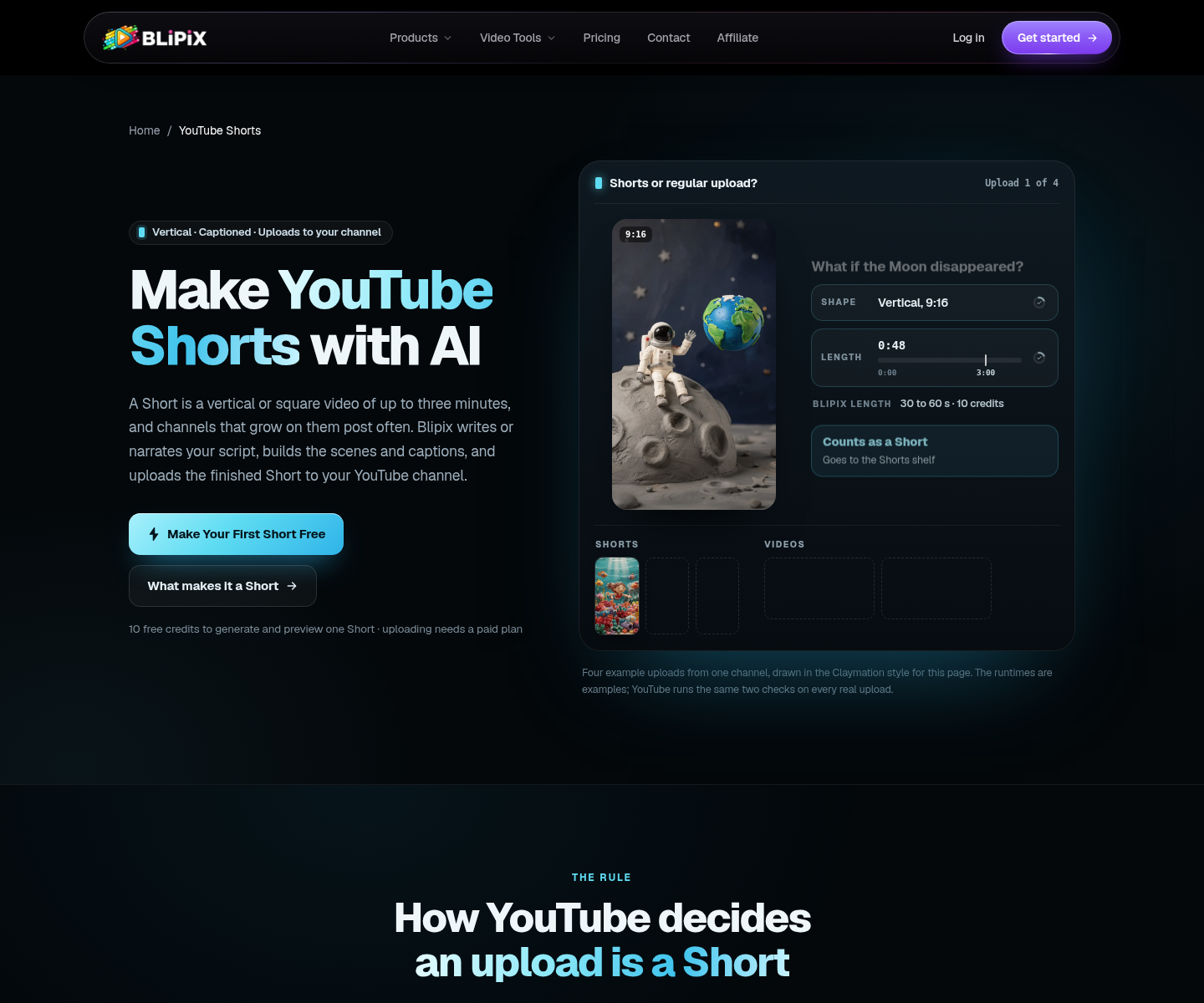
YouTube's Shorts upload help says you can choose up to 15 short videos at a time in YouTube Studio on a computer. That's a batch size, not a daily limit. The same page defines a Short as square or vertical and up to 3 minutes long.
Spam and monetisation are two different rulebooks
When people say a channel was "demoted for posting too much", they're often mixing up two separate sets of rules.
Community Guidelines: the Spam policy
YouTube's Spam policy says:
"Automated or synthetic mass-production: Using automated tools or AI to churn out high volumes of similar content with minimal changes. While testing out new creation tools or posting a few variations of a video is ok, we don't allow use of these tools to flood our platform with repetitive content."
One example on that page matters for faceless channels: channels that use the exact same background music and repetitive AI-generated imagery across many videos, with each video reading out an AI-generated script. Violations can lead to removal, a warning or strike, monetisation suspension, or channel termination.
YPP: inauthentic and reused content
The channel monetization policies decide whether a channel can earn through the Partner Program, and they apply to the channel as a whole rather than to a single upload. In July 2025 YouTube renamed "repetitious content" to "inauthentic content"; the reused content policy did not change.
Inauthentic content includes "AI-generated content made with generic or unoriginal templates giving the impression of mass production without adding the creator's original, authentic insights or perspective". Reused content covers channels that repurpose material already on YouTube or another online source without significant original commentary, substantive modifications, or educational or entertainment value.
These policies affect monetisation eligibility. They are not the same as a copyright strike. Our guide to YouTube's inauthentic content policy for faceless and AI channels goes deeper. Neither rulebook names an upload count. Both describe sameness at scale.
Why posting more is not always better
Each Short gets less of your attention
Going from one Short a day to five gives each hook, script and fact-check far less time unless you add people. The opening seconds are usually the first thing to get rushed — see our hook and script strategy guide.
Volume pushes you towards templates
The easy path to high volume is to fix everything except the script: same voice, music, visuals and structure. Some consistency is branding; too much of it across many uploads is the Spam policy example. Five weak Shorts are five weak results — they do not average up.
Review work and burnout scale too
Every Short is your responsibility: the facts, YouTube's altered or synthetic disclosure, and Made for Kids. At ten a day, careful review is unrealistic for most solo creators (labelling AI-generated videos). A pace you can keep for months teaches you more than a two-week burst followed by silence.
A practical frequency plan
This is our suggested approach, not a formula. If you are starting from zero, how to start a faceless YouTube channel covers niche and setup first.
Step 1: Set cadence by review time
Time how long one Short takes when you'd be happy for a stranger to judge it: idea, script, visuals, a full watch-through and the Studio settings. Divide your weekly hours by that. That's your ceiling. Start below it.
Step 2: Hold it for four to six weeks
Steady uploads are easier to learn from than spikes.
Step 3: Increase only if three things are true
- Each new Short has its own idea, not a reworded script on the same template.
- You still watch every Short in full before it goes out.
- Average view duration and average percentage viewed aren't sliding as volume rises.
If one fails, step back down.
Step 4: Keep timing separate
When to post is covered in best time to upload YouTube Shorts. Check titles with the YouTube title length checker before you queue a batch.
| Cadence | Shorts per 30 days | Usually suits | Main risk |
|---|---|---|---|
| 3 a week | About 13 | New channels, side projects, research-heavy topics | Slower learning; gaps can grow |
| 1 a day | 30 | Creators who can review every day | Rushed scripts on busy days |
| 2 a day | 60 | Proven formats with plenty of distinct ideas | Template drift; review becomes a real job |
| 5+ a day | 150+ | Teams with separate ideas, editing and review | Looking mass-produced; hitting upload limits |
Signs your volume looks mass-produced
This checklist is ours, not YouTube's, based on the wording of the Spam and monetisation pages. If several apply, slow down.
- Only the script changes. Same voice, music, AI imagery and structure across dozens of uploads. That's close to the Spam policy example.
- Titles differ by a word or two. "10 facts about Rome", "10 facts about Athens", each with the same opening line.
- Episodes blur together. Scroll your Shorts tab with the sound off. If the first frames look interchangeable, viewers will notice too.
- No perspective. Nothing in the script reflects what you know, think or found.
- Repurposed material. Clips or text from YouTube or elsewhere with little commentary or change. That's reused content territory.
- Reposts with tiny tweaks. YouTube's wording says a few variations is ok. Posting the same Short again and again is not.
Our faceless video script analyzer can be a second pair of eyes on a draft before production. No tool, ours included, can tell you whether a channel complies with YouTube's policies. That judgement stays with you.
What this means if you use Blipix
Blipix makes faceless Shorts (script, voiceover, visuals and captions) and, on paid plans, can upload them to YouTube. Output is vertical (9:16) or square (1:1); the most common length is 30–60 seconds at 10 credits. Start from the YouTube Shorts maker or the faceless video generator. Because Blipix can post automatically, careless use makes the problems above easier to fall into.
Series, schedules and the review window
A series is the autopilot part. You set the niche or prompt, style, voice, captions, music, length, format, channels, and a schedule: once a day, twice a day, or three times a week (YouTube automation). Style can stay consistent; the substance of each episode has to vary. Write a specific prompt and rework generic scripts — the Shorts script generator helps with drafting.
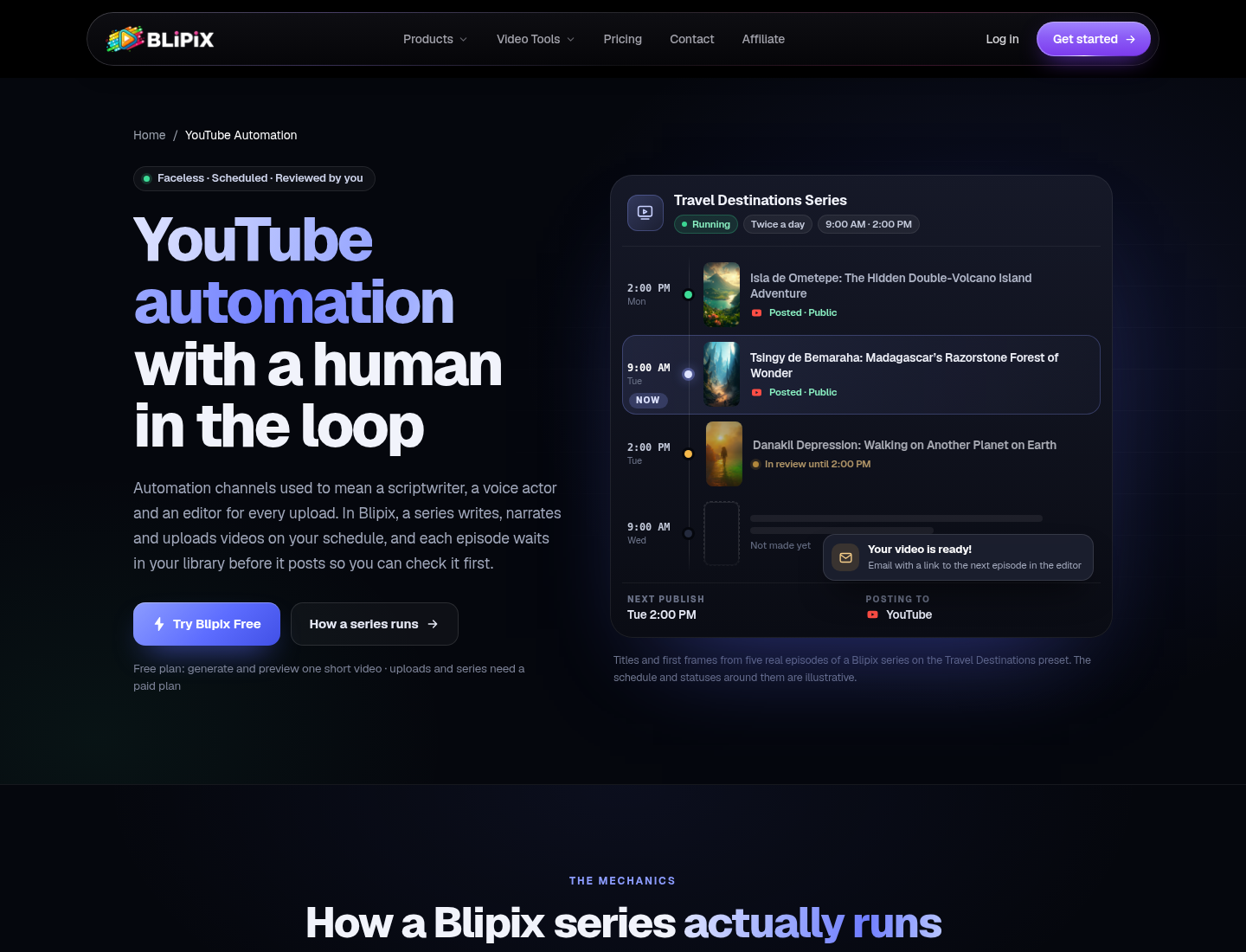
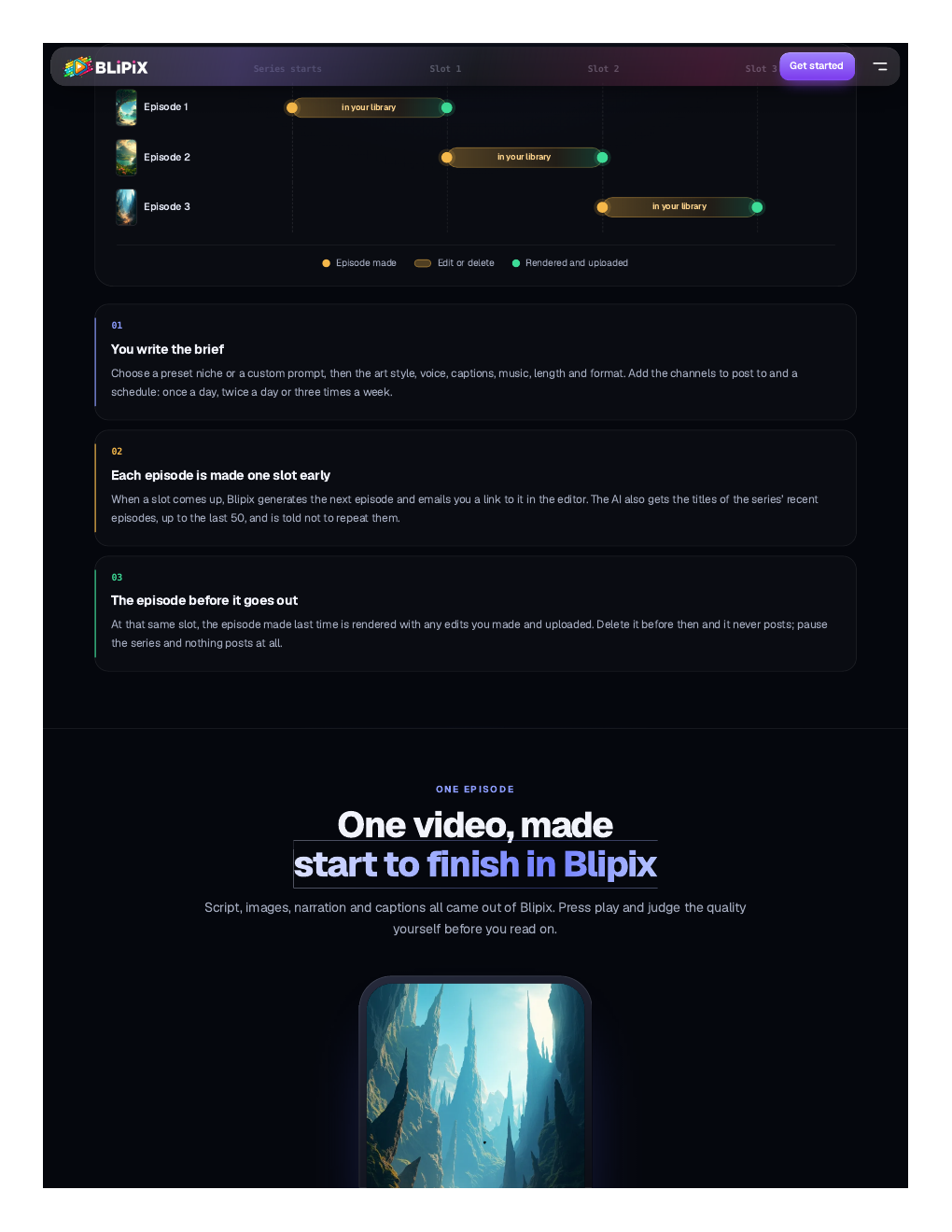
Each episode is made one slot early and emailed for review. At the next slot, the previous episode is rendered and uploaded. Until then you can edit or delete it; pause the series and nothing posts. Blipix does not fact-check scripts, and it does not set YouTube's altered or synthetic disclosure or Made for Kids — those stay with you in YouTube Studio.
Series caps, credits and the calendar
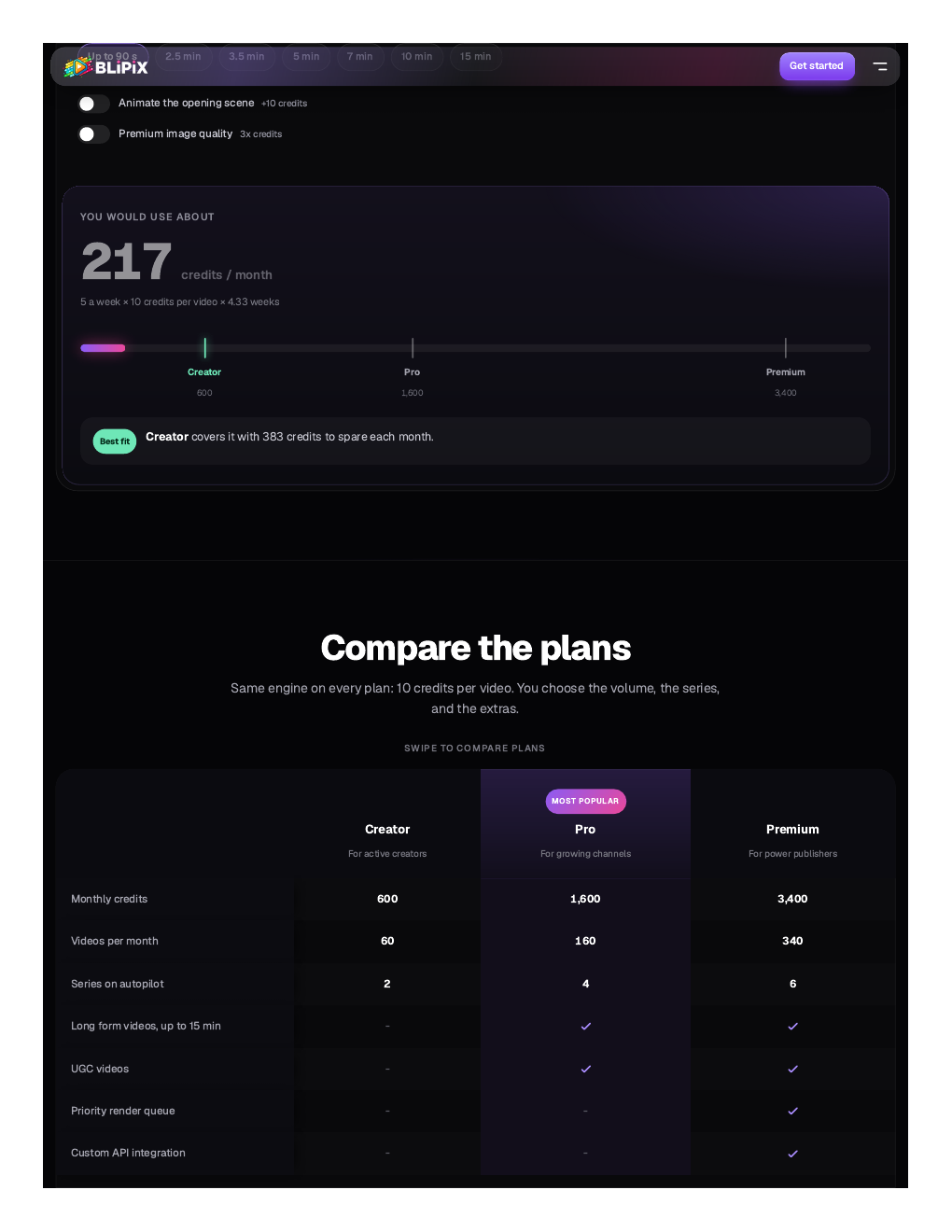
Creator includes 2 series, Pro 4 and Premium 6. Auto-publishing to YouTube, TikTok and Instagram is included on paid plans.
A higher cap is not a reason to aim every series at one channel. Six series at twice a day would put 12 Shorts a day on that channel — exactly the volume this article asks you to question.
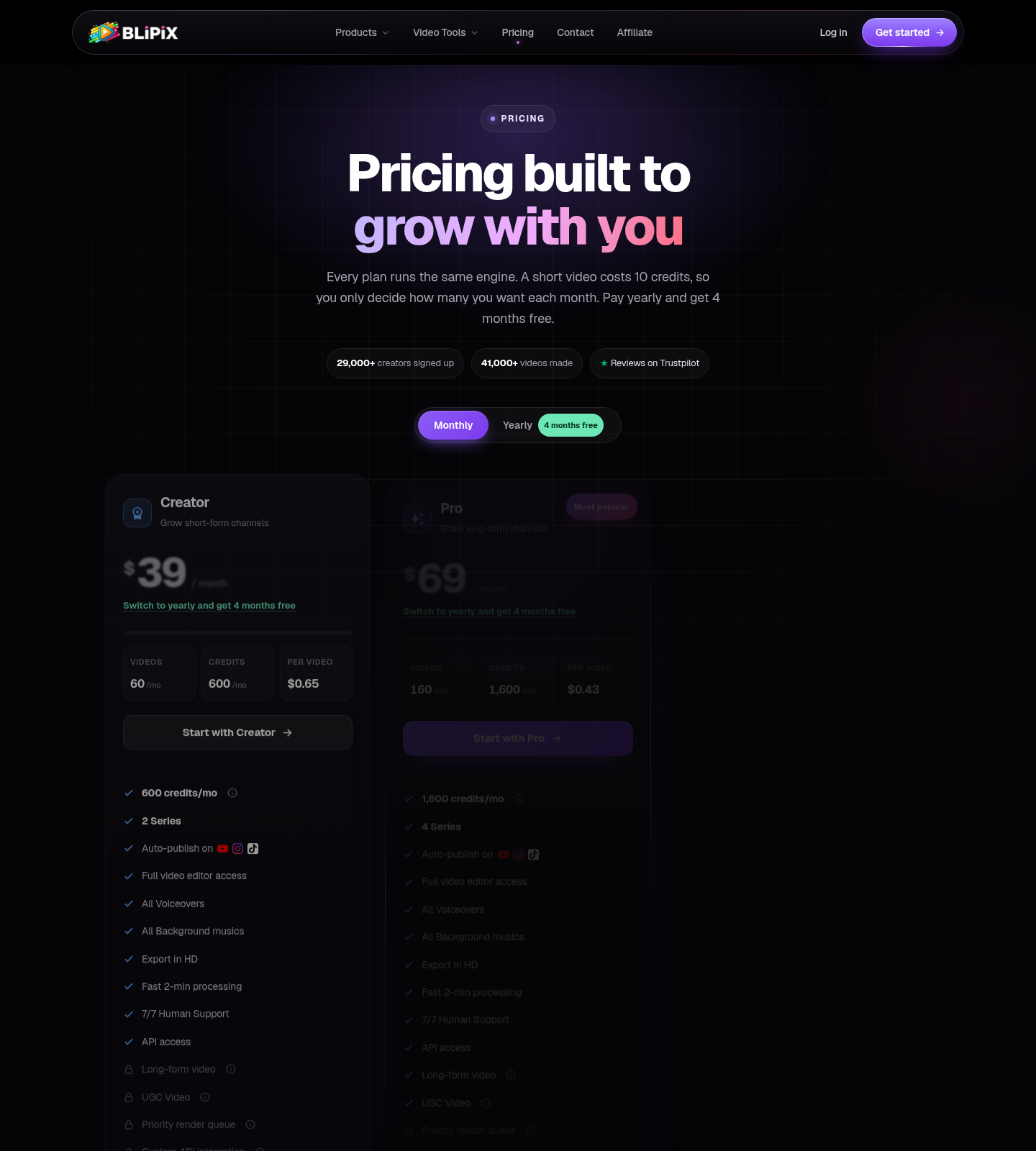
At 10 credits per 30–60 second Short, once a day for 30 days is about 300 credits; twice a day is about 600. See pricing for plan details. The Content Calendar in the app shows every scheduled post from your series in one month view, with timezone-aware times and channel badges — useful for spotting when one channel is getting crowded. Treat views calculator estimates as ranges, not promises.
What autopilot does not cover — and when Blipix is the wrong pick
A series tries to avoid repeating recent episode titles (up to the last 50). Different titles are not different content. Autopilot does not exempt you from YouTube's Spam, inauthentic or reused content rules. For how much care one Short can take, see how we made a faceless history Short.
If you want ten or more unique, heavily edited Shorts a day by hand with your own footage, a regular editor and YouTube Studio may fit better. Blipix is built for a reviewed series cadence, not unlimited volume.
FAQ
Is three Shorts a day too many?
Not by itself. It's too many if they start to look alike, if you can't review each one properly, or if retention falls as you add them.
Will posting less often hurt my Shorts?
YouTube says no minimum posting cadence is required for videos to perform well. The cost of posting less is fewer Shorts in total and slower learning.
Is "inauthentic content" a strike?
No. Inauthentic and reused content are YPP monetisation policies that affect whether a channel can earn, and they aren't a copyright strike. Removals and Community Guidelines strikes come from violations such as spam.
How many Shorts keep a channel active in YPP?
From February 1, 2027, one option is "2 long-form videos or 5 Shorts uploaded every 90 days". That's an activity floor, not a growth plan.