❓
About What If? Niche
'What If?' faceless videos explore alternate realities by posing intriguing questions. These thought experiments are not just entertaining; they engage the audience's imagination and provoke deep thought, making them a hit among curious minds. Hypothetical scenarios in this niche can travel across time, delve into alternate histories or imagine different cultural or scientific outcomes. The hooks lie in the curiosity-inducing questions that open each video, and the exploration of unexpected consequences that follow. Videos in this format are often presented as short narrative documentaries, bringing to life the story of a world that might have been. As a creator, you can grow a 'What If?' faceless channel by continuously presenting fresh and lesser-known what-ifs to keep the audience engaged. Monetization can be achieved through sponsorships from brands that target intellectually curious demographics or via Patreon and similar platforms where viewers show their appreciation for quality content.
Script development
Blipix provides guidance in crafting compelling 'What If?' narratives that captivate the audience's imagination.
Narrative Visuals
Blipix helps translate your hypothetical scenarios into engaging and fitting visual sequences.
Audience Engagement
Blipix aids in fine-tuning the pacing and emotional hooks to keep viewers engaged throughout the video.
Why What If? Works
Perfect For
- Intellectual storytellers
- Historical conjecture enthusiasts
- Science fiction creators
- Cultural theory explorers
Key Benefits
- Stimulates viewer engagement
- Encourages educational discourse
- Fuels audience curiosity
- Potential for high viewer retention
Popular What If? Video Scripts
Proven What If? video scripts that get high engagement and views
Script #1
Hook
What if the Library of Alexandria didn’t burn, but quietly moved? Imagine a small, secret society of scribes realizing that copying matters more than display. Instead of celebrating scrolls, they taught shipping routes, encryption-like copying methods, and fireproof storage. When later wars hit, the “lost” texts never vanished. They just traveled. By the time Rome rose, Greek medicine would already have translated into multiple languages, standardized dosages, and common clinical notes. That means fewer deadly misunderstandings in early hospitals. Then the real shift: engineers. With continuous access to practical geometry and shipbuilding manuals, Mediterranean navigation gets safer centuries earlier. Voyages become routine, not heroic. Colonization still happens, but it looks different. Fewer catastrophes, more stable exchange, and a slower timeline for the “miracle” of later scientific revolutions because the groundwork never had to be reinvented. So here’s the unsettling question: if knowledge keeps moving under the radar, do we still get our breakthrough moments, or do they dissolve into steady, invisible progress? Keep watching. I’ll show what history would look like to a child in 1500.
Script #2
Hook
Most people think the scientific revolution was sparked by geniuses. What if it was sparked by bookkeeping? Here’s the overlooked twist: in 1600s Europe, accurate measurement and recordkeeping were already improving because of commercial accounting. Now imagine a reformer persuades guilds to standardize weights and balance tests across cities, creating a shared “audit culture” for experiments. No grand lab equipment needed. Just trust. When early astronomers measure a star, the error bars become comparable. When alchemists claim a compound, their scales and procedures are audited like ledgers. Journals start to demand the same reliability that merchants demanded from one another. Funding also changes. Investors back experiments that produce reproducible numbers, not just clever theories. That accelerates verification and weakens charismatic fraud faster than in real history. But it also has a cost: wild, unrepeatable ideas struggle to survive long enough to mature. In this alternate timeline, science becomes less theatrical and more procedural. The breakthroughs still happen, but they look like spreadsheets first. And you can almost hear the debate: does method make truth arrive faster, or does it filter out the weird discoveries we needed most? Wait for the next part, because the real shock is who benefits, and who gets left behind.
Script #3
Hook
Surprising fact: the “silent” night sky we admire was partially shaped by city lights and air conditions. Now what if the Industrial Revolution had dirtier coal, but cleaner smoke? Imagine factories burn the same fuel, producing more soot, yet a regulatory miracle early on forces universal chimney scrubbers and stricter stack designs. Soot still exists, but it falls close to the source instead of hanging in the upper atmosphere. Nights become darker inside the towns, but still hazy near the ground. Astronomers respond quickly because they can finally map the sky without that persistent atmospheric glow. Meanwhile, public health also improves differently: more particulate stays local, making localized outbreaks sharper, prompting rapid medical responses in specific districts. Now the ripple effect. With earlier, clearer sky observations, variable stars and comets are cataloged faster, feeding accurate predictions sooner. Space science becomes practical, not romantic. Instead of waiting for late 1800s technology, governments fund early balloon and optical networks to monitor transient events. Predictive astronomy becomes a civic service. But then, emotion hits: people start believing the sky is readable daily, almost personal. Culture shifts around scheduled “celestial checks,” like weather. Religious awe competes with routine certainty. So the question is, would we still chase mystery, or would we schedule it out of existence? If you want, I’ll end by telling you the one consequence nobody expects for art and dreams.
Make Faceless Videos Stand Out with Style
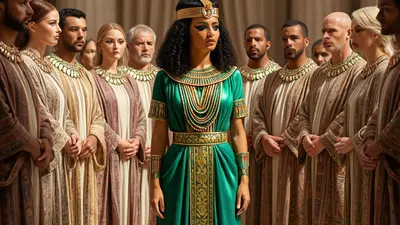

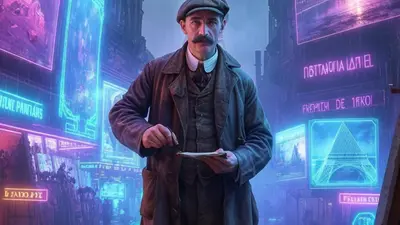

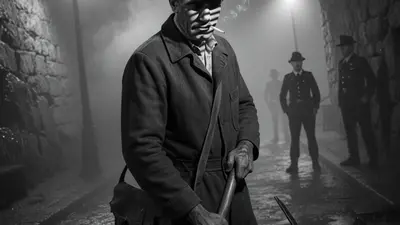


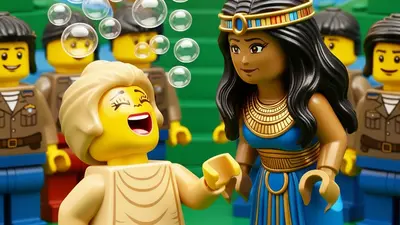
Create What If? Videos in 3 Easy Steps
Start building your What If? faceless video channel today, no camera or editing required. 🚀
Step 01
Select the What If? Topic
Choose the What If? topic or write your own script, pick your image style, voiceover, and music that fits the What If? niche, and our AI will instantly generate your video.
Step 02
Preview and Customize
Preview your What If? faceless video and make changes as needed. Fine-tune the script, title, music, images, and captions to match your What If? audience perfectly.
Step 03
Automate and Manage
Set your posting schedule, connect your social media accounts, and let Blipix automatically publish your What If? videos. Grow your What If? channel while we handle the posting.
Questions About What If? Videos
Everything you need to know about creating What If? faceless videos
01
What makes a compelling 'What If?' video?
A compelling 'What If?' video hinges on the strength of its premise. It begins with a thought-provoking and unique scenario that piques curiosity and commits to exploring its consequences to the end. Weaving real-world logic with speculative outcomes adds authenticity and further captivates viewers’ attention. Always keep the tone conversational and the pacing tight. The goal is to leave your audience thinking and looking forward to more mutant historical, scientific or cultural scenarios.
02
Could you suggest unique angles for a 'What If?' video?
Absolutely! Branch away from mainstream topics; tackle odd historical turning points or overlooked influential events instead. For instance, delve into ‘What if decimal system was never invented?’ or ‘What if traditional farming practices survived the industrial revolution?’ Emphasize the unexpected twists and unique perspectives, blending factual bases with well-thought speculation, to intrigue your viewers.
03
How can I hook viewers in this 'What If?' niche?
Capturing attention in the 'What If?' niche relies heavily on the choice of your scenario. Start with a bold and curious question that taps into the viewer's inherent curiosity. Make your video titles magnetizing and your introductions riveting. Remember to unfold your scenarios progressively, giving viewers a reason to watch until the end. A surprising or thought-provoking conclusion can help keep your viewers hooked for your next video.
04
How does the 'What If?' niche perform on YouTube Shorts vs TikTok?
Though bite-sized versions of 'What If?' content perform well on both YouTube Shorts and TikTok, they come with their distinct advantages. With YouTube Shorts, you get to use the platform's more extensive tagging system, which might help your video reach a wider audience. On TikTok, 'What If?' videos have the potential for viral engagement due to the platform's addictive scrolling and sharing system. So, optimize your delivery to align with both platforms' unique strengths.
05
What's the key to maintain a consistent 'What If?' series?
Consistency in the 'What If?' series lies in uniformity of format, style, and posting schedule. Stick to a particular structure (like Provoke-Explore-Conclude), maintain your unique voice throughout, and release content regularly to keep your audience engaged. Mixing various categories like history, science, or culture can also keep your series fresh and captivating.
06
What is a common mistake to avoid when creating 'What If?' videos?
A common pitfall in making 'What If?' videos is slipping into overused tropes or mainstream scenarios. It's vital to strive for uniqueness, look for lesser-known historical, scientific, or cultural twists and avoid predictability. Keeping the outcomes of your scenarios speculative yet plausible and authentic can ensure your content retains its individuality and appeal.
07
Can I use Blipix.pro to create faceless 'What If?' videos?
Definitely. Blipix.pro excels in creating faceless videos, perfect for scripts that focus on thrilling 'What If?' scenarios. Just input your scripts exploring unique twists in history, science, or culture, guide the pacing and tone, and watch as admiring viewers tune into your immersive and thought-provoking 'What If?' content adventures.