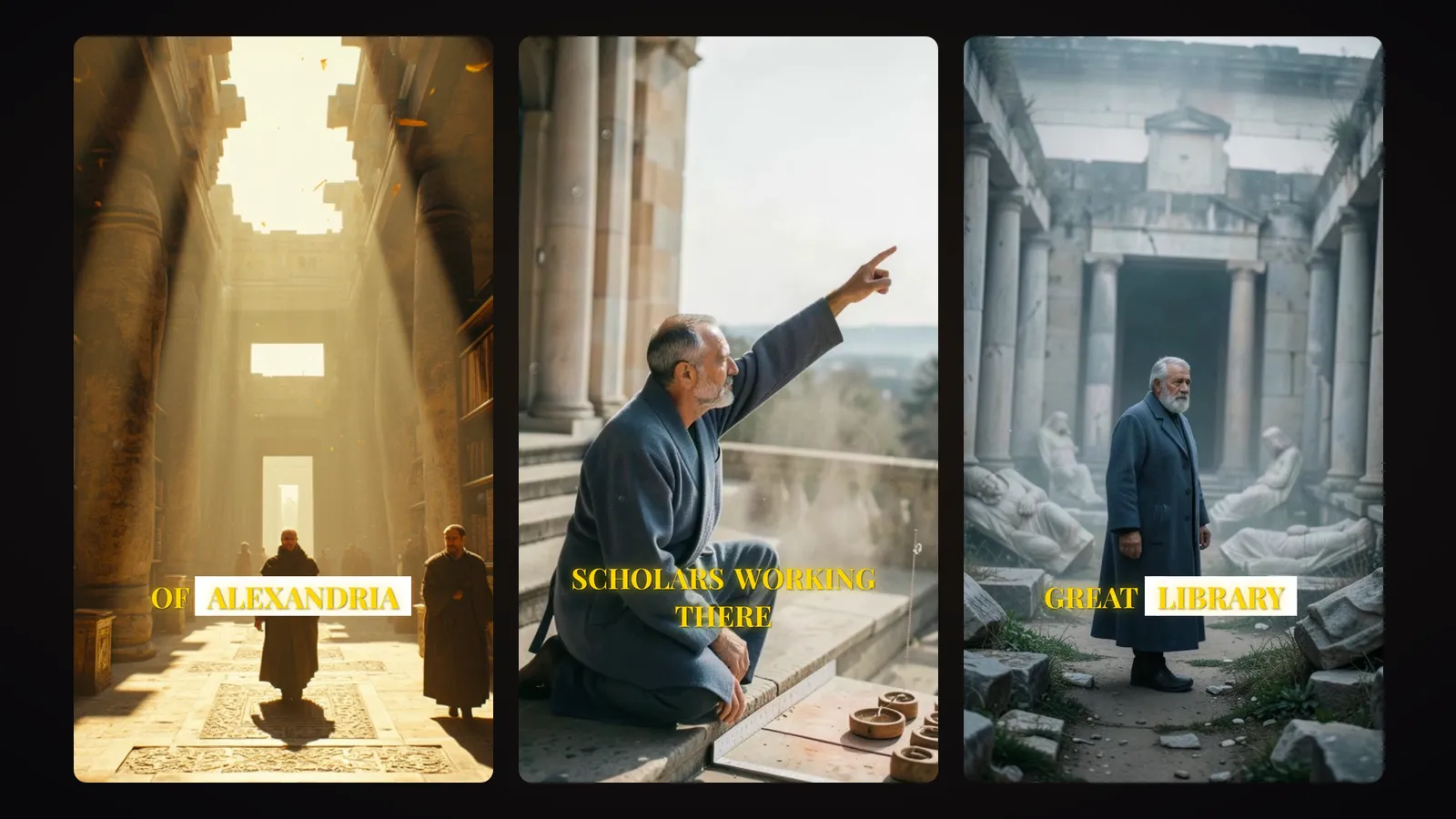
If you run a faceless channel, or make videos with AI images and an AI voice, you have probably seen warnings that YouTube is demonetizing AI channels. The policy behind them is real but narrower than the headlines. YouTube does not refuse channels for using AI, a synthetic voice or no on-camera presenter. It refuses channels whose videos are interchangeable, plus two other kinds it started naming separately in July 2026.
This guide reads the policy as YouTube publishes it as of October 2026, links every official page we used, and marks where we interpret rather than quote. One disclosure: we make Blipix, an AI video tool, so we have a stake here. The Blipix section near the end says where the tool helps and where it makes the problem easier to create.
In short
- AI and faceless are not the problem. YouTube's VP of Trust and Safety says the company is "agnostic" to the tools behind a video.
- Interchangeable videos are. Template-made, mass-produced or repetitive content is not eligible for ads, and has not been for years.
- July 2025 renamed the rule from "repetitious" to "inauthentic" content. July 2026 split it into three named categories. YouTube says neither changed the underlying policy.
- Reviews judge the whole channel, starting with your theme, most viewed and newest videos, and metadata.
What the policy says, as of October 2026
The rules live on YouTube's channel monetization policies page, which applies to every channel in the YouTube Partner Program (YPP) and every channel applying to it. The page states that "video" covers Shorts, long-form videos and live streams, so a Shorts-only channel is held to the same standard.
The core expectation fits in two lines. Your content should be your own creation, and if you borrow material, you "need to change it significantly to make it your own". It should also not be "mass-produced, generic, repetitive, or manipulative", and should exist "for the enjoyment or education of viewers, rather than for the sole purpose of getting views."
Under that, the page has four sections that matter for faceless and AI channels. The first three make up what YouTube used to call inauthentic content; the fourth, reused content, is a separate policy that often gets confused with it.
| Section on the policy page | What it targets | Examples YouTube lists as not monetizable |
|---|---|---|
| Generic or repetitive content | Videos that look made from a template or feel interchangeable | Characters put in the same situation with the same outcome; image slideshows, templated storylines or scrolling text with little narrative; AI content from generic templates that adds none of the creator's own insight or perspective |
| Unsatisfying or off-putting content | Emotionally manipulative formulas and shock for views | Repeated disturbing themes with no cohesive story; series of animals in exaggerated distress; unrelated AI clips stitched together to shock; realistic fake celebrity deaths or disasters |
| AI personas related to sensitive topics | AI characters presented as human experts giving advice | An AI "doctor" giving diagnoses or remedies; AI podcast hosts giving investment tips; AI personas giving legal advice |
| Reused content (a separate policy) | Other people's material repackaged without real changes | Clips of a show edited together with little narrative; compilations from other social sites; readings of website or news text you did not write |
The page is just as specific about what is allowed, a half that gets quoted far less. A shared intro and outro is fine when "the bulk of your content is different". A series with recurring characters, or a channel that only reviews products, is fine when "each video has a distinct storyline, focus, or concept". Allowed examples include "using AI to visualize a unique character and narrative you invented". The summary line: with automated tools or templates, "the final product must still demonstrate your creative vision and provide educational or entertainment value."
What changed in July 2025, and again in July 2026
July 2025: a new name, not a new ban
The policy page still carries a dated note from July 15, 2025. It describes "a minor update" to the old "repetitious content" policy, made to clarify that it covers content that is "repetitive or mass-produced", and renames it "inauthentic content". It adds that this kind of content "has always been ineligible for monetization" and that the reused content policy did not change.
The announcement still set off posts claiming YouTube was about to cut off AI channels. YouTube answered in a short Creator Insider video on July 10, 2025, where creator liaison Rene Ritchie said that "channels that use AI in their content remain eligible for monetization". His examples of mass-produced content were channels uploading "narrative stories with only superficial differences between them" and "slideshows that all have the same narration". Our reading: the new name pointed more clearly at the real target, channels that look automated from end to end, which AI had just made cheap to run.
July 2026: one vague label becomes three named categories
A year later YouTube rewrote the explanation. On July 16, 2026, Creator Insider published an interview with Matt Halprin, YouTube's VP of Trust and Safety, who opened with "there's no change in our underlying policy at all". He conceded that "inauthentic content" on its own was "not very helpful" to creators and split it into the three categories in the table above, which are now the headings on the policy page.
Three of his points matter most for faceless creators:
- Tools are not the test. "If you make it with gen AI, great. If you make it without gen AI, that's great, too." He also said AI can help a channel make "a higher volume of high quality content" that YouTube wants in the program.
- Tutorials are not permission. He pointed to tutorials that pitch a trending AI format as a quick way into YPP, and said the next channel "making all the same kind of stuff" won't stay in the program "or won't get in in the first place."
- The persona rule is narrow. AI personas "may be fine overall", in his words, but not when they talk about finance, legal issues or medical issues.
As of October 2026, YouTube's policy updates log lists the July 2025 change but has no entry for the July 2026 rewrite, so the official record is the policy page plus the interview. Trade press such as Tubefilter also reported it as a clarification, not a crackdown.
What "mass-produced" and "repetitive" mean in practice
YouTube writes its test from the viewer's side. The policy describes content that "may feel repetitive to viewers after watching several videos in a row from the same channel", and says the substance of each video "should be materially varied". Notice what the test leaves out: how often you upload, which tools you use, and whether a face ever appears.
From here, this is our interpretation rather than YouTube's wording. A useful check is what we call the swap test: replace the topic of one of your scripts with the next one on your list. If the script still works with only the nouns changed (same hook, same five beats, same closing line), you are publishing a template. Templates are a fine production tool; the problem starts when the template is the whole video.
| Format | Reads as templated | Reads as a series |
|---|---|---|
| Fun facts Shorts | "Five facts about [animal]" daily, same opener, facts any search returns | Each episode answers one odd question, explains why, and ends on something viewers can check |
| Horror stories | Daily AI stories from one prompt: a noise, a door, a monster, the same twist | Stories you wrote, with different settings and a reason each one is frightening |
| History explainers | Encyclopedia summaries read in order, the same map, the same ending line | One event per video, an argument about why it happened, sources named in the description |
| Reddit-style stories | Other people's posts read aloud word for word | Stories you wrote yourself, or posts you clearly analyze and add to (the reused content rules apply here too) |
Volume is not the test, but three uploads a day from one template produce exactly the "several videos in a row" experience the policy describes.
The two newer categories, for faceless channels
Unsatisfying or off-putting content mostly catches formats built on distress. Halprin's examples were animals in danger waiting to be rescued and minors put in distressing situations; the policy page adds fake disasters and stitched AI clips with no story. If a niche only works when the viewer is upset, it is a monetization risk however well it is produced.
The AI persona rule matters most for finance, health and legal channels. It targets content "that presents itself as a human expert providing advice". Our reading is that a narrated explainer that names its sources and does not pose as a doctor, lawyer or adviser differs from an AI "doctor" handing out remedies. YouTube has not published where that line falls, so treat advice-giving AI characters in those niches as off-limits on a channel you want to monetize.
Inauthentic content vs reused content
These two policies ask different questions, and a channel can fail one while passing the other.
| Generic or repetitive content | Reused content | |
|---|---|---|
| The question | Are your videos interchangeable with each other? | Did you make this, or repackage someone else's work? |
| Typical faceless failure | One AI template with new nouns each day | Narration over other creators' clips; reading articles or posts aloud |
| Does permission help? | Not relevant | No, it applies "even if you have permission" |
| What fixes it | Real variation in angle, structure and story | Significant commentary, substantive editing or your own material |
| Changed in 2025 or 2026? | Renamed, then split and clarified | No change, according to YouTube |
Two lines from the reused content section deserve attention. It is "not based on copyright, permission, or fair use", so a clean Content ID record does not mean you pass. And it is judged across the channel: if reviewers "cannot clearly tell that you made the content, monetization may be removed from your entire channel." The trap is that each fix covers only one policy. A channel of 200 original stories that all follow one plot fails the first test; a channel of varied compilations built from other people's clips fails the second.
How YouTube reviews a channel
As of October 2026, the YPP overview lets you apply with 1,000 subscribers plus either 4,000 qualified watch hours in the last 12 months or 10 million qualified Shorts views in the last 90 days. Those numbers only put you in the queue. Then "automated systems and human reviewers will review your channel as a whole", typically in about a month. (Our YouTube views calculator gives a rough idea of what ads could pay at your current views.)
Reviewers cannot watch everything, so the policy page lists where they may focus:
- your channel's main theme
- your most viewed videos
- your newest videos
- the videos with the biggest share of watch time
- video metadata, meaning titles, thumbnails and descriptions
- your channel's About section
So your most viewed video weighs more than its share of uploads: if your one breakout was also your laziest upload, a reviewer will probably open it. And because newest uploads count, improving your process before you apply shows up in the review.
Flags from viewers or rivals do not decide anything. Halprin called mass flagging a myth: "it doesn't matter if one person has flagged it or a thousand people have flagged it", because reviewers compare the channel with the guidelines.
If you are rejected or suspended
- First rejected application: appeal within 21 days, or keep uploading and reapply after 30 days.
- Later rejections, or if you have already reapplied once: wait 90 days.
- Suspended from YPP: appeal within 21 days, or reapply 90 days after the suspension, according to YouTube's monetization disabled help page.
The same page tells suspended channels to review their videos against the policies and edit or delete the ones that break them before reapplying. In the interview, Halprin said creators reapply after 90 days "all the time and lots of them get back in", once the channel has new content of the kind YouTube wants.
What monetized faceless channels tend to have in common
YouTube does not publish a recipe, and we won't pretend one exists. But the allowed examples on the policy page and the two Creator Insider videos point to the same habits.
- Scripts that start from research. Facts from sources the creator could name, and something in each video the viewer has not heard twenty times.
- A point of view. The narration ranks, argues or explains why. A list of facts with no opinion is the easiest thing to mass-produce.
- Visible editing decisions. Each scene picked for its line, weak scenes replaced, pacing that follows the story.
- Variety inside a steady identity. One narrator, one look and one intro are allowed. The angle and format rotate: an explainer one week, a story or a myth-versus-evidence video the next.
- A pace that leaves time to check. They publish only as fast as someone can watch each video before it goes live.
Choosing a niche with depth makes all of this easier. Our niche guides, such as interesting history, show how one broad topic splits into many distinct angles, and our guide on how to start a faceless YouTube channel covers the setup decisions that come first.
A self-audit checklist before you apply
Run this on your own channel, ideally with a friend who has not seen your videos. It takes an evening, and each step maps to something reviewers look at.
- Watch your five most viewed videos as a stranger would. Could another channel have uploaded them unchanged? Fix or replace those first.
- Watch your ten newest uploads back to back. Note what repeats besides the intro, outro, voice and style. A repeated hook, structure or ending is the pattern the policy describes.
- Run the swap test on three scripts. If a new topic is enough to make a new video, rework the structure, not just the wording.
- Trace your facts. AI drafts invent dates, names and figures. You should be able to say where each key claim came from.
- Look for reuse. Rework videos that mostly read someone else's text, or use footage you did not make without substantial commentary.
- Look for distress formats and AI experts. Animals or children in peril, fake disasters and shock clips are off-putting content; AI personas giving finance, health, legal or political advice have their own rule.
- Set the AI disclosure where it applies (see the note below).
- Rewrite your metadata. Titles that promise only what the video delivers, descriptions written for that video, and an About section that says who runs the channel. The YouTube title length checker helps titles stay readable on phones.
- Decide what to do with videos that fail. YouTube tells suspended channels to edit or delete videos that break the policies before reapplying. The same logic holds before a first application.
- Match your schedule to your review time. If you cannot watch every video before it posts, you are publishing faster than you can check.
A note on AI labels
Disclosure is a separate rule from monetization. As of October 2026, YouTube's GenAI disclosure page asks you to set "AI use" to Yes in YouTube Studio when AI content looks realistic, such as a real person saying something they never said or a realistic event that did not happen. Clearly stylized or animated videos, AI help with scripts or captions, and cloning your own voice for voice-overs are listed as not needing it, and YouTube says disclosing "alone won't limit a video's audience or impact its eligibility to earn money." A label does not fix a repetitive channel, though: a labeled template is still a template.
What this means if you use Blipix
Blipix turns a prompt or a script into a narrated video with AI scenes, captions and music. That speed is exactly why this policy matters for our users: the tool that saves an evening of editing also makes it easy to publish one video forty times with different nouns. No tool, ours included, can make a channel eligible for monetization. What it can do is leave you in control of the parts reviewers look at.
- Your own words. The Script template narrates exactly what you paste, up to 1,800 words on paid plans and 112 on the free plan. It only translates your text if you pick another narration language.
- Drafts, used as drafts. The AI writer can draft from a prompt and from web pages you add as Additional Knowledge. Check every fact, and make sure the result is not just a narrated reading of that page. Our free faceless video script generator gives you an outline to rewrite, and the script analyzer comments on structure and pacing. Neither checks facts.
- Every scene is editable. Rewrite a scene's text, swap its image for a new AI image, a stock photo or clip, or your own upload, change its length, and delete or add scenes. After changing words, use Regenerate Voiceover (5 credits) so the narration matches.
- Range without starting over. 39 art styles, voices from ElevenLabs, MiniMax and OpenAI, your own cloned voice on paid plans, 28 caption presets, and output for YouTube Shorts or long videos up to 15 minutes on Pro and higher plans. The policy measures variety in substance, not in filters.
- Metadata you can rewrite. Blipix drafts a title, description and four hashtags per video, all editable before posting. Rewrite them; reviewers read them.
- Series, with a review window. A series needs a paid plan. Each episode is generated one posting slot early and Blipix emails you a link to it in the editor, so you can watch and edit it, or pause the series, before it goes out. If you do nothing, it posts. Series scripts are AI-written from your prompt or a niche preset; the AI sees recent episode titles to avoid repeats, which prevents duplicate titles, not duplicate substance. For every word to be yours, make videos one at a time with the Script template.
- The AI label is your call. Blipix's YouTube upload does not set YouTube's AI disclosure. Stylized videos rarely need it, but if one shows realistic scenes of real people, places or events, set "AI use" under Attributes in YouTube Studio.
On the free plan you can generate and preview one 30 to 60 second video. Exporting, posting, series and some editor actions need a paid plan, listed on the pricing page. None of it comes with a promise about monetization: YouTube makes that call, one channel at a time.
FAQ
Can AI voice channels be monetized?
Yes. Nothing in the monetization policies rules out synthetic narration, and YouTube's disclosure page says cloning your own voice for voice-overs needs no label. Channels get refused for what the voice reads: a generic script, a template, or someone else's text. A voice imitating a real person is a different matter, covered by the disclosure rules and possibly other policies.
Does the policy apply to Shorts?
Yes. A Shorts channel applying through the 10 million views route is reviewed against the same rules, and short templated formats are where repetition shows up fastest, because viewers swipe through several in a row.
Can a channel that is already monetized lose it?
Yes. YouTube says it continuously checks channels in the program. If part of your channel no longer fits, you may get a notice that a suspension is scheduled, with 7 days to submit a video appeal; YouTube says it responds within 14 days. Miss that window and the 21-day appeal and 90-day reapplication rules above apply.
Will YouTube's AI detection get my channel demonetized?
The automatic detection on YouTube's disclosure page belongs to the labeling system: it adds AI labels. Monetization is decided by the channel review described above, which weighs what the videos are, not how they were made.